Behind the Lens on an Island Bioblitz
Every species has a story.
And during the 2024 Hakai Institute bioblitz on Quadra Island, British Columbia, the stories could have filled a book.
Over the course of three whirlwind weeks, researchers and naturalists fanned out to wander forest trails and rocky shorelines.
They also donned scuba gear to explore the chilly depths of the Salish Sea. Their mission: to document as much life as possible and capture a living snapshot of a changing coast.
Behind the Lens on an Island Bioblitz
Over the course of three weeks, researchers and naturalists descended on Quadra Island, British Columbia, to catalog a kaleidoscope of coastal biodiversity.
Story and photographs by Bennett Whitnell
August 6th, 2025 • 2,500 WORDS, 37 PHOTOS
The magic of a bioblitz lies in the moments of discovery, such as seeing a moss glow under UV light, or finding a deep-sea basket star that has turned up in the shallows.
Using nets, lenses, lights, and dive gear, participants uncovered everything from mustard kidney lichen growing on tree bark to polychaete worms hidden in the sand. Some findings were familiar; others were surprising. And a few expected creatures were nowhere to be seen.
Over three weeks, researchers logged an impressive 14,000 observations comprising over 2,000 unique species, with the majority of these recorded on iNaturalist. But more than just a species tally, a bioblitz offers a pulse check for ecosystems in flux. In a time of biodiversity loss and uncertainty due to climate change, these discoveries help scientists build a baseline for the future. And for the people behind the microscopes and underwater cameras, it’s a chance to connect—with each other, and with the intricate web of life being woven on Canada’s dynamic west coast.
Forest
Researchers ventured across rain-drenched forests and rocky hillsides.
Their goal was to identify plant life, survey intricate insect communities, and observe the diverse array of birds and mammals that call Quadra Island home.
The larger aim was to catalog the island’s land-based biodiversity to provide crucial information about the current state of life.
This baseline can help researchers detect if and when the ecosystem changes in the future.
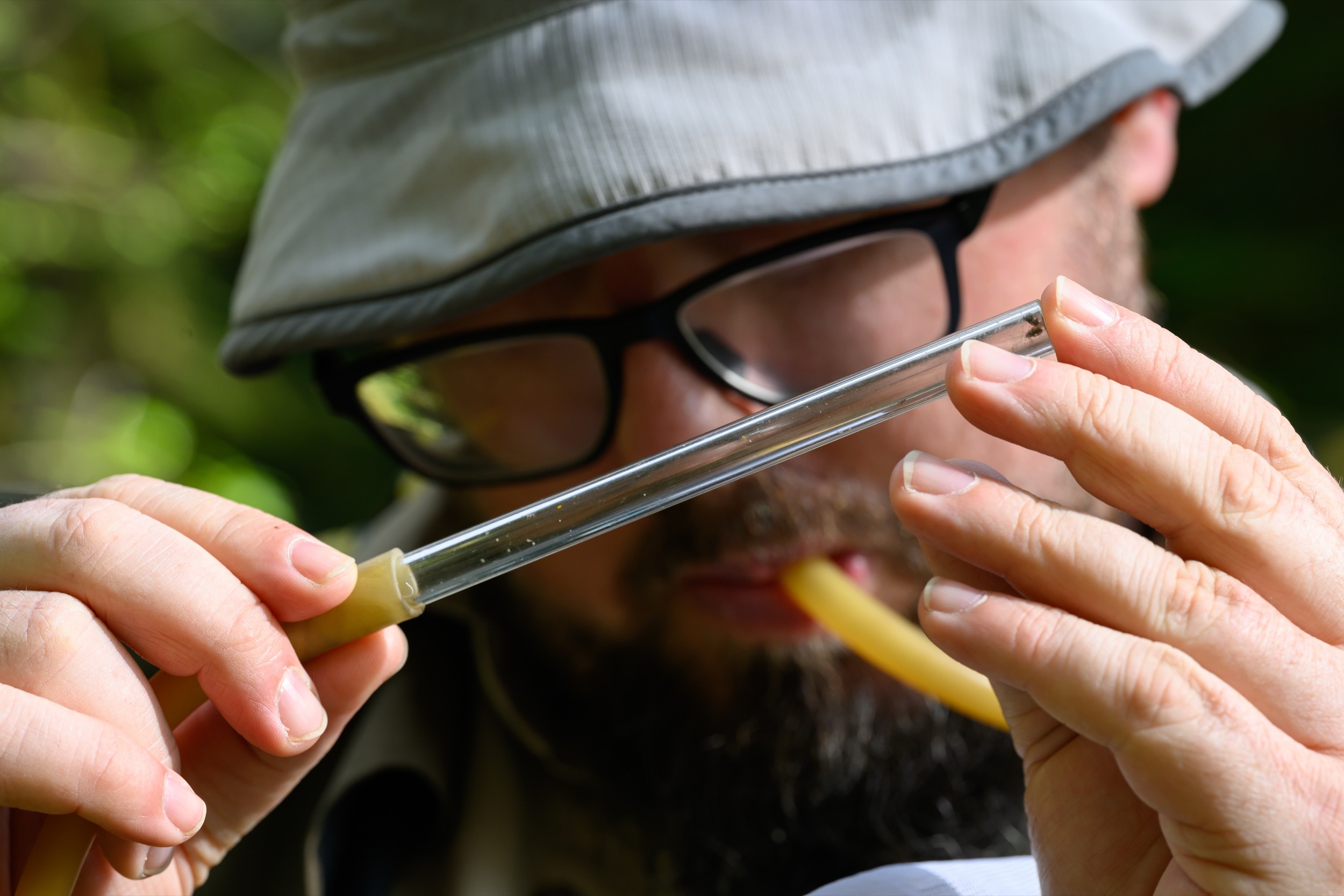
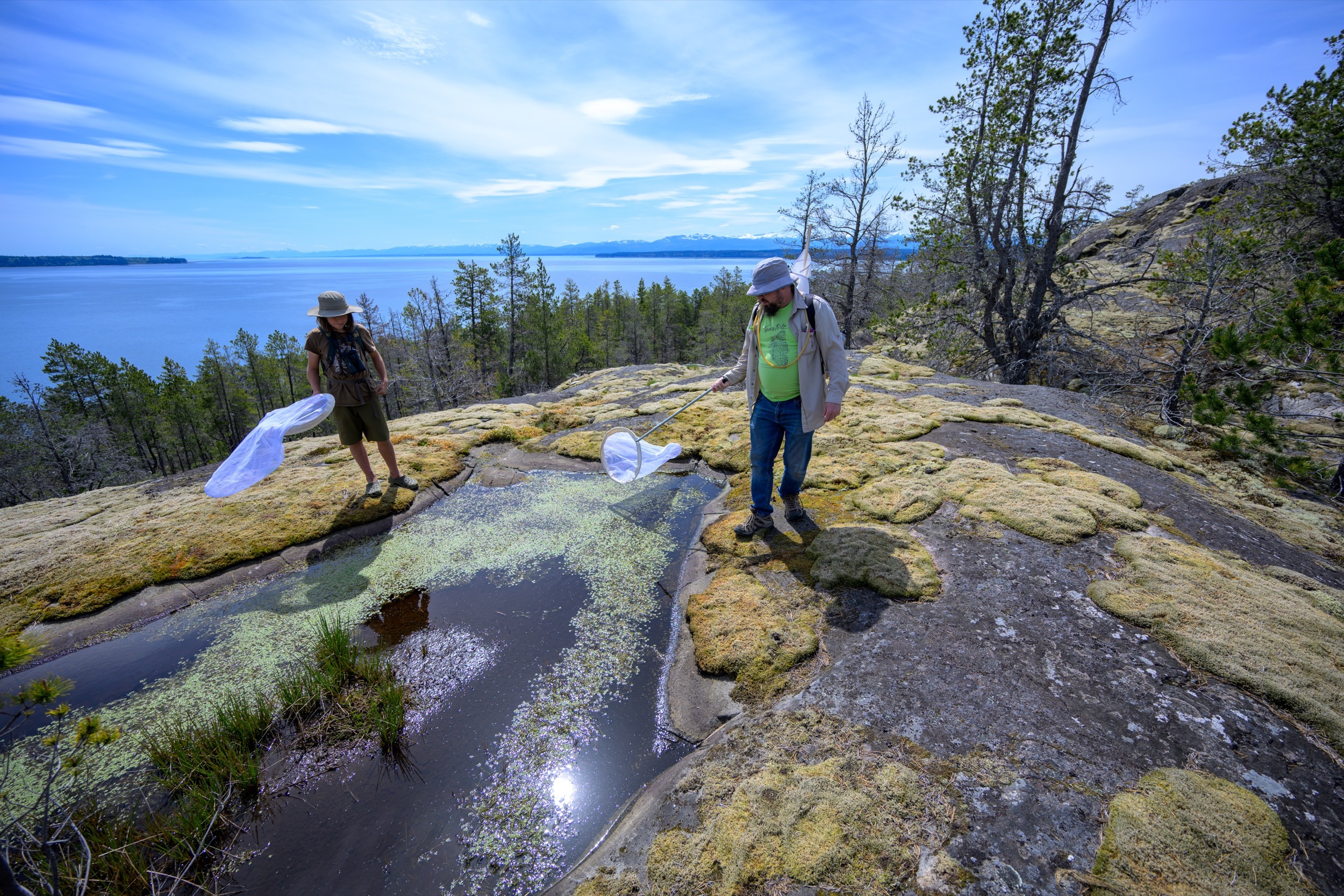
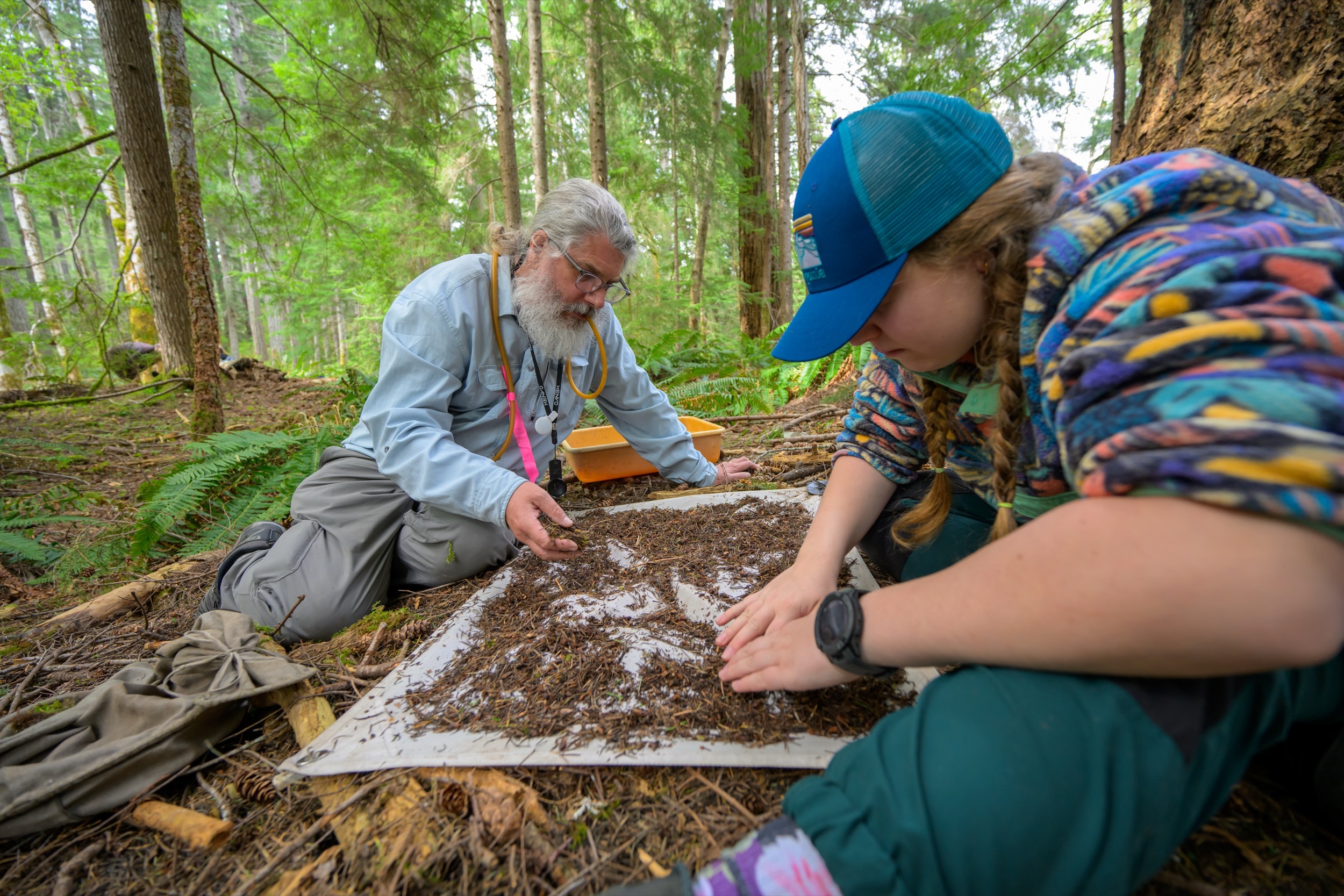
Bug collecting during the Quadra Island Bioblitz was part science, part treasure hunt. Scientists like Amelia Nimmon, a marine researcher from the Hakai Institute, and Darren Copley, a vertebrate collections manager from the Royal BC Museum, crouched low to sift through leaf litter, searching for elusive spiders and other ground dwellers hiding beneath the forest floor (first photo). Over on Read Island, Joel Gibson, the curator of entomology at the Royal BC Museum, and a young naturalist named Kai Sutherland swept bug nets through the air above a still pool, hoping to catch fleeting fliers (second photo). For the tiniest specimens, Gibson turned to his pooter—a strawlike suction tool with a built-in filter designed to safely slurp up insects without accidentally swallowing them (third photo). It’s careful hands-on work that reveals the miniature world that’s often overlooked.
Bug collecting during the Quadra Island Bioblitz was part science, part treasure hunt. Scientists like Amelia Nimmon, a marine researcher from the Hakai Institute, and Darren Copley, a vertebrate collections manager from the Royal BC Museum, crouched low to sift through leaf litter, searching for elusive spiders and other ground dwellers hiding beneath the forest floor (top photo). Over on Read Island, Joel Gibson, the curator of entomology at the Royal BC Museum, and a young naturalist named Kai Sutherland swept bug nets through the air above a still pool, hoping to catch fleeting fliers (bottom left photo). For the tiniest specimens, Gibson turned to his pooter—a strawlike suction tool with a built-in filter designed to safely slurp up insects without accidentally swallowing them (bottom right photo). It’s careful hands-on work that reveals the miniature world that’s often overlooked.
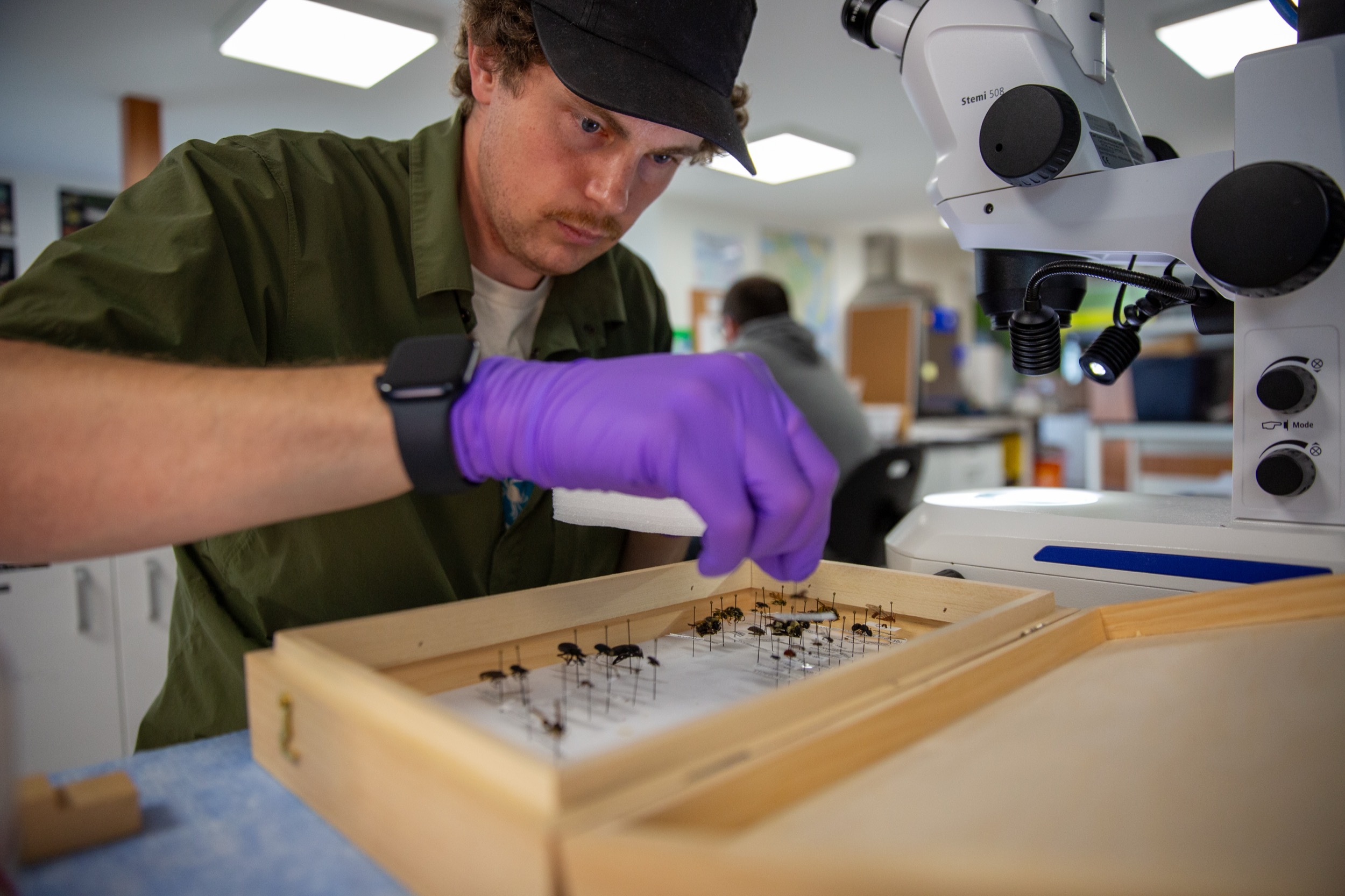
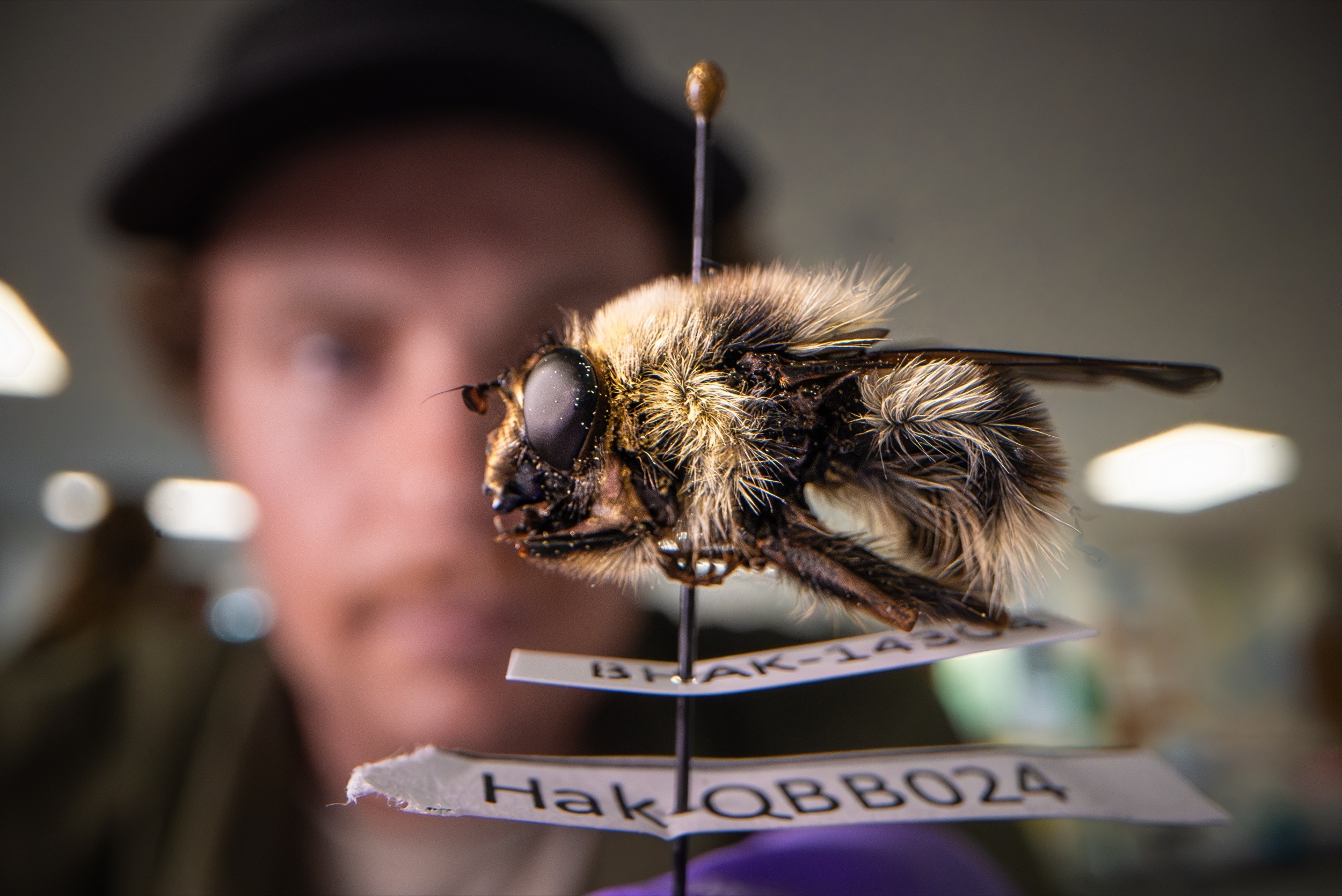
Nathan Early, a master’s student at the University of British Columbia, pins insects as a method of cataloging and preserving specimens to create a record of the biodiversity for long-term monitoring.
“It really is a powerful experience to have everyone learning and doing something together like this.”
“It’s just so motivating that we can have this time where we’re not supposed to be doing other things—this is what we’re supposed to be doing. I wish my whole life was a bioblitz.”
—Kristen Miskelly, co-owner, Satinflower Nurseries
XXXX
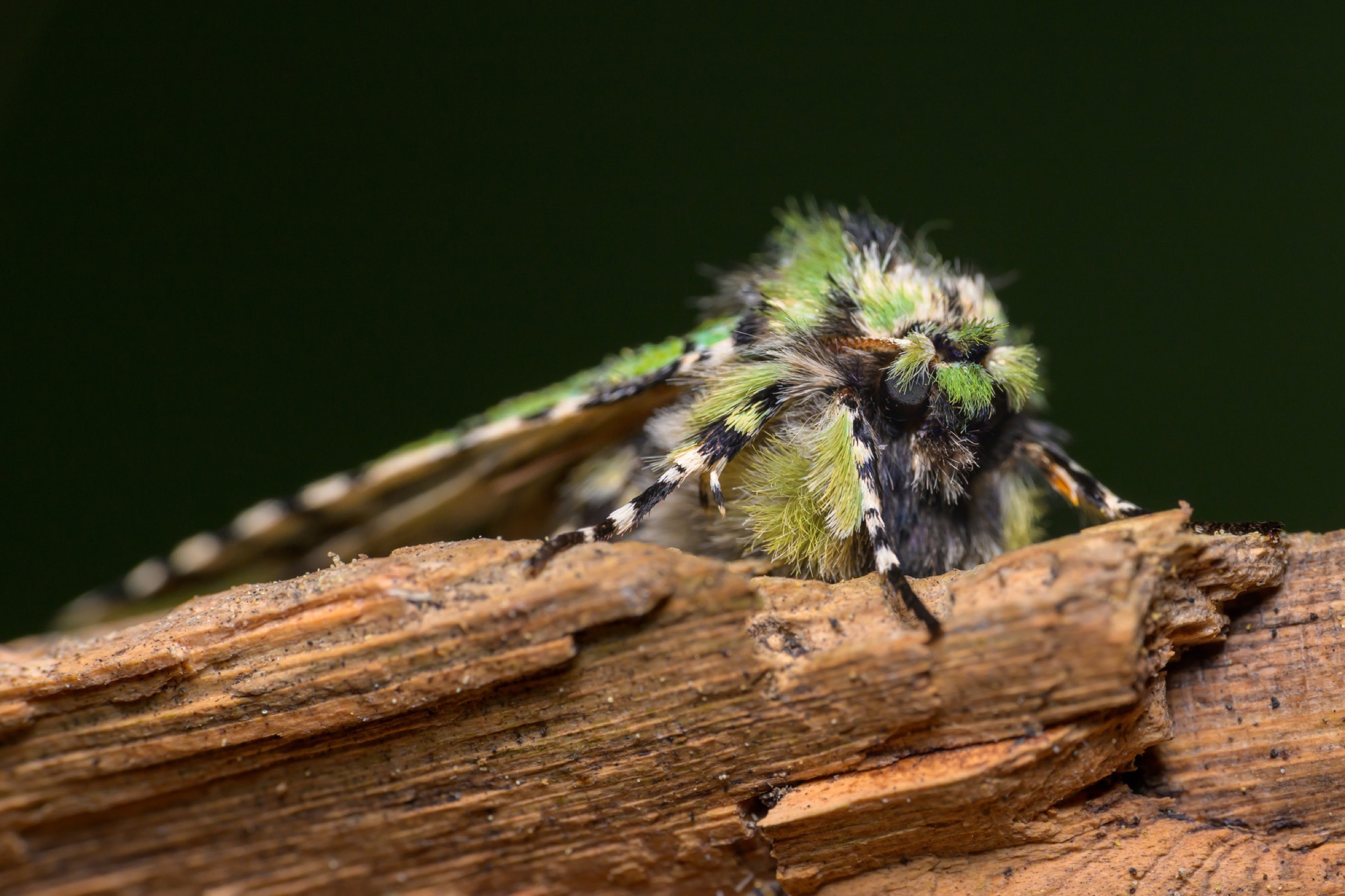
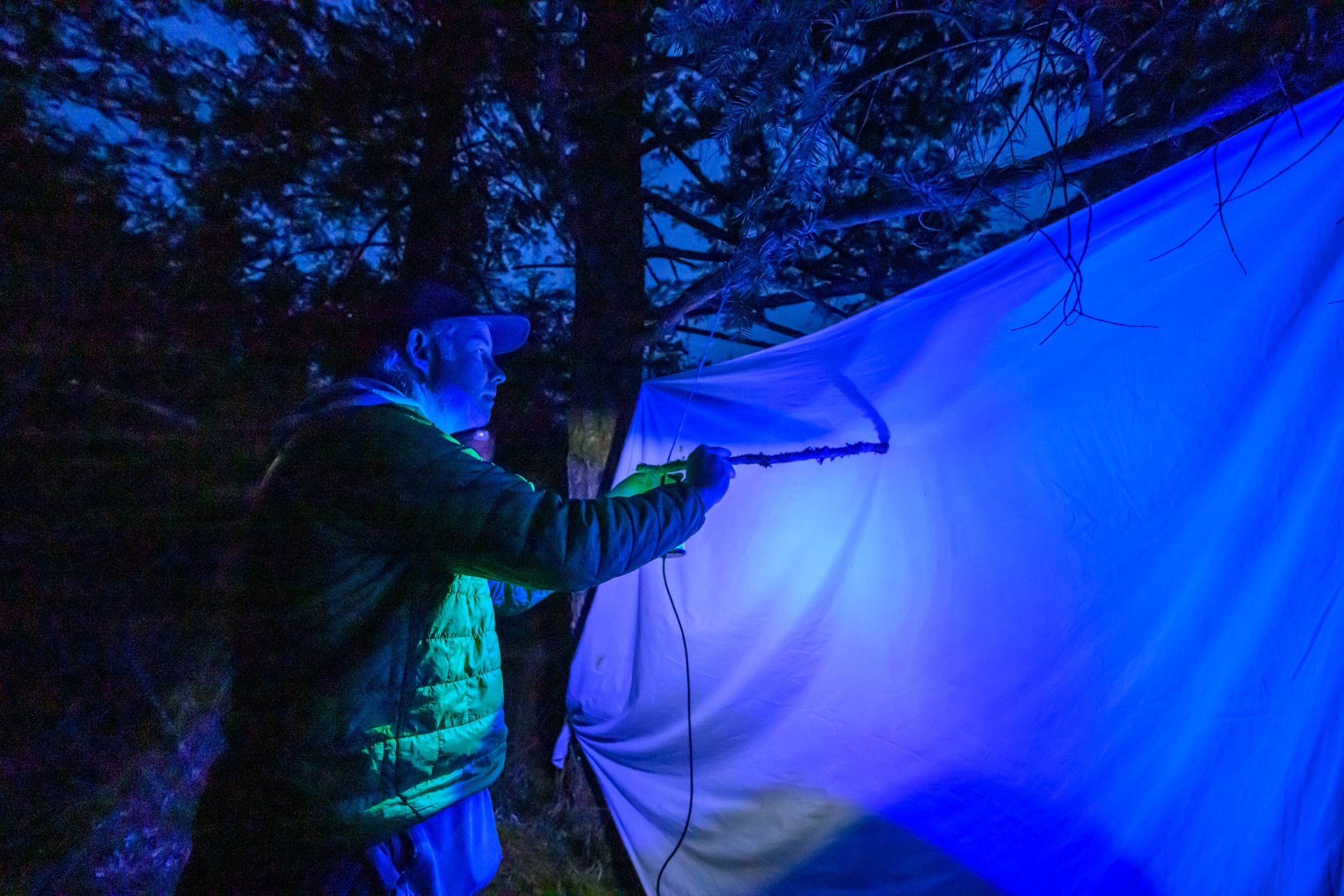
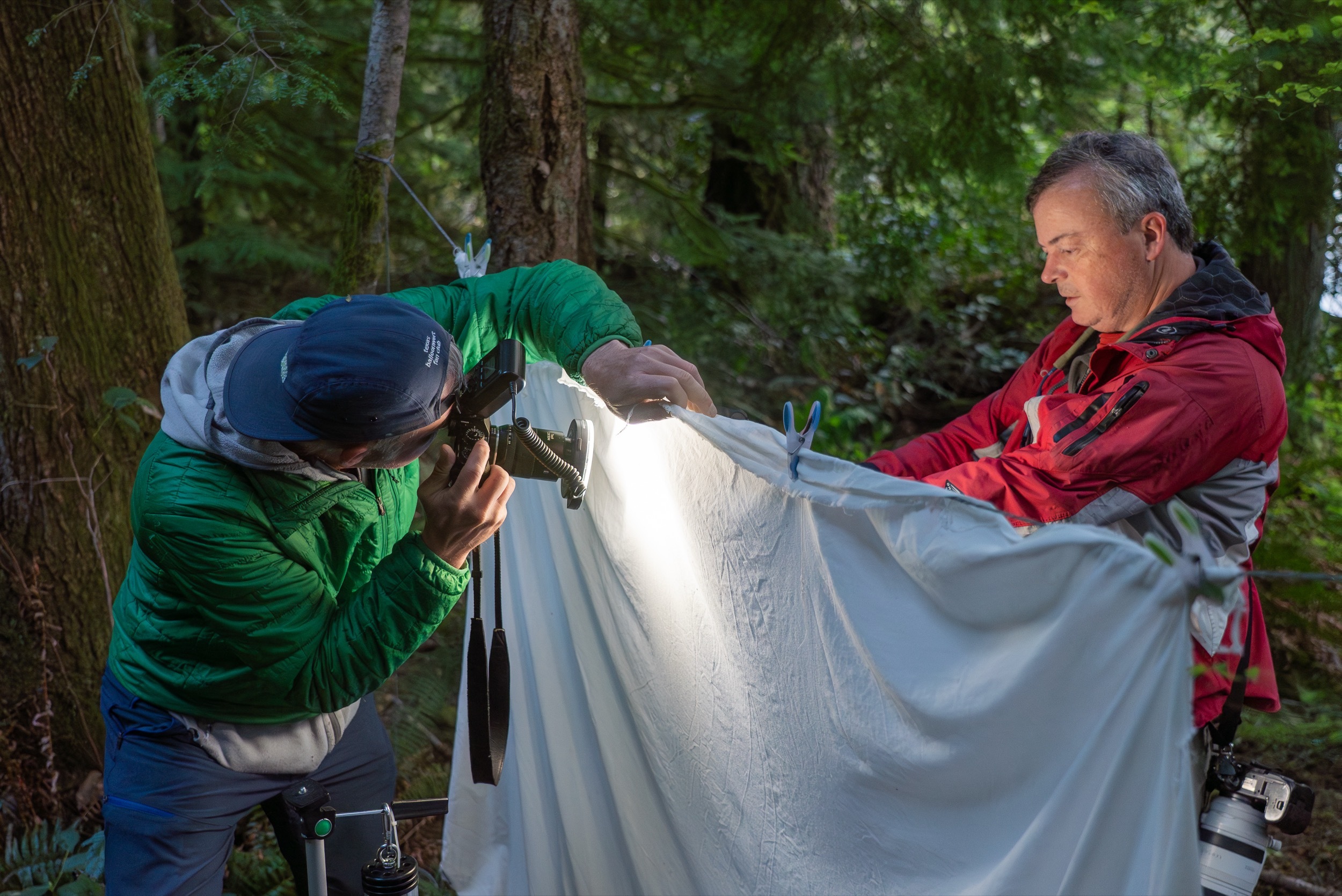
Brian Starzomski, a professor of environmental studies at the University of Victoria, set up a so-called moth sheet that he bathed in specific wavelengths of UV light overnight to attract moths (top left photo). Starzomski and John Reynolds, an ecology professor at Simon Fraser University, returned early the next morning to photograph the moths that were drawn to the sheet the night before (top right photo). Simple but creative techniques like this mean all kinds of creatures that might otherwise get missed—like this Comstock’s sallow moth (bottom photo)—are enticed from their hiding spots and can be included in the survey.
Brian Starzomski, a professor of environmental studies at the University of Victoria, set up a so-called moth sheet that he bathed in specific wavelengths of UV light overnight to attract moths (first photo). Starzomski and John Reynolds, an ecology professor at Simon Fraser University, returned early the next morning to photograph the moths that were drawn to the sheet the night before (second photo). Simple but creative techniques like this mean all kinds of creatures that might otherwise get missed—like this Comstock’s sallow moth (third photo)—are enticed from their hiding spots and can be included in the survey.
“One of a bioblitz’s greatest values is the way it connects professionals with people everywhere—all the keeners, all the lay naturalists. Bioblitzes bring people together.”
—Gerry Allen, emeritus professor of biology, University of Victoria
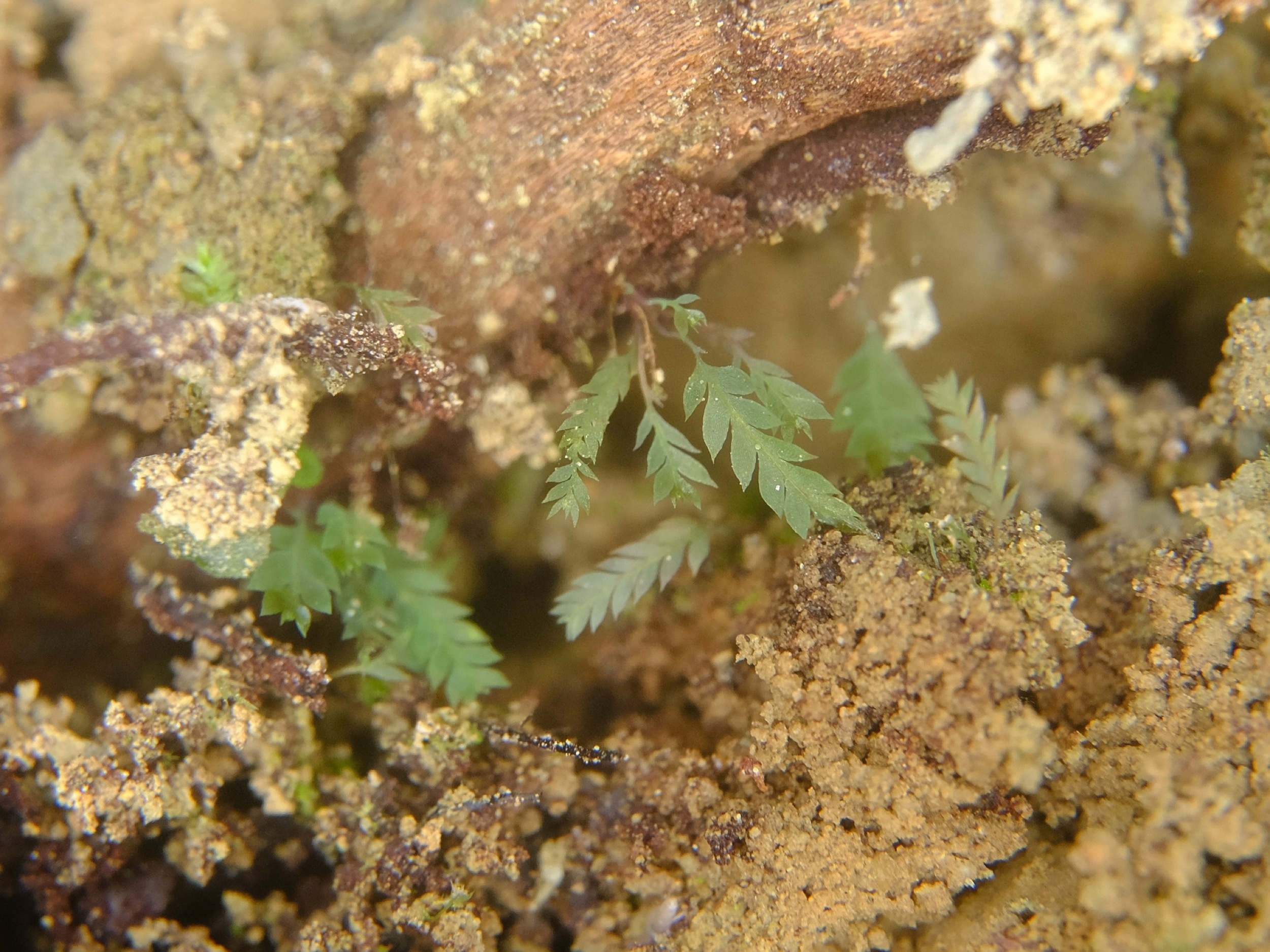
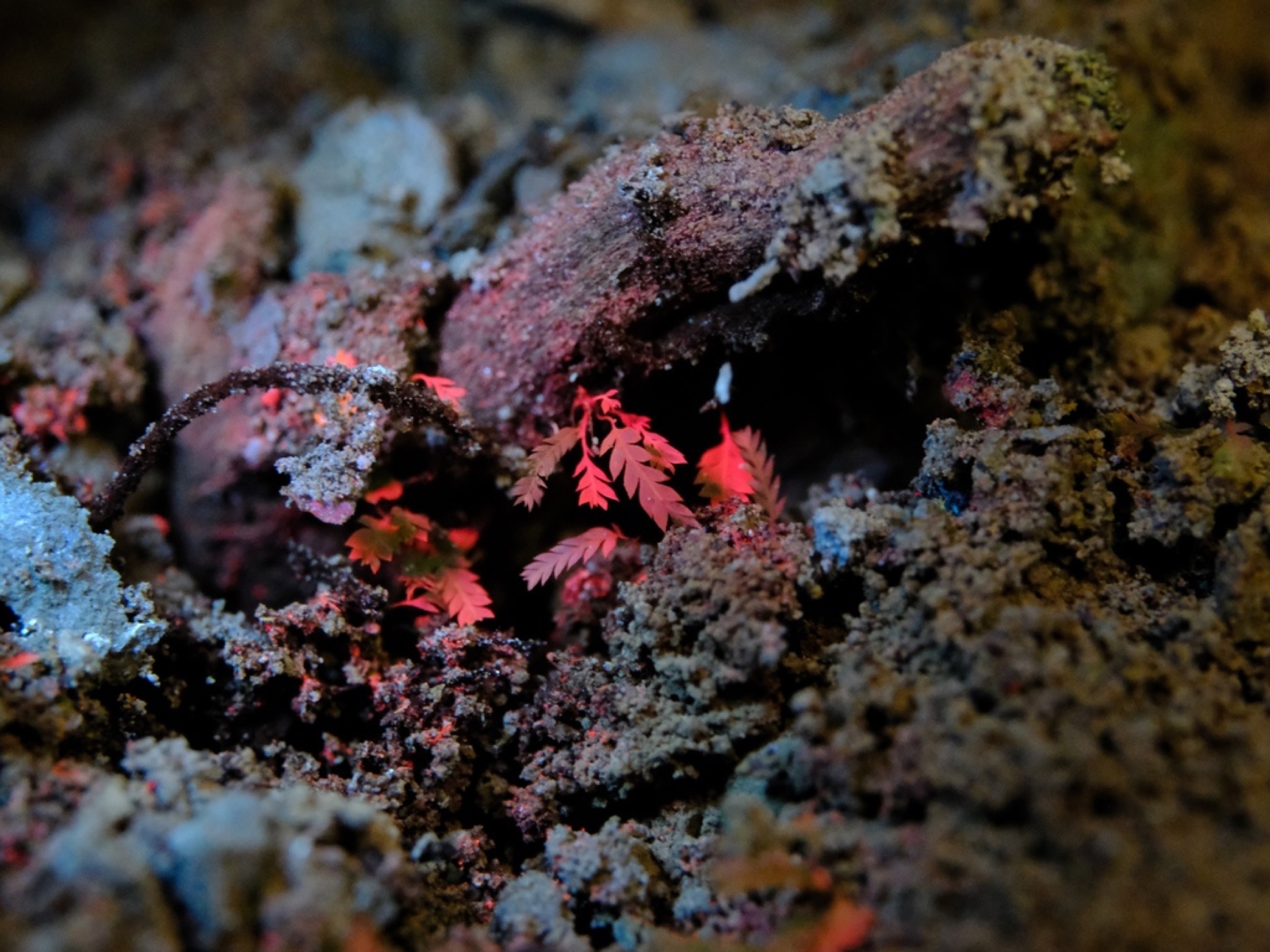
One of the interesting species found during the blitz was luminous moss, also known as goblin’s gold. It was photographed in daylight (left photo) and at night using a UV light, which makes the moss glow (right photo). This darkness-loving moss was found in the shade of an uprooted tree. Other plants can easily outcompete it in areas with more light, but the moss has specialized cells that act like lenses able to harness even the faintest of light, which allows it to thrive in tucked-away nooks and crannies.
One of the interesting species found during the blitz was luminous moss, also known as goblin’s gold. It was photographed in daylight (first photo) and at night using a UV light, which makes the moss glow (second photo). This darkness-loving moss was found in the shade of an uprooted tree. Other plants can easily outcompete it in areas with more light, but the moss has specialized cells that act like lenses able to harness even the faintest of light, which allows it to thrive in tucked-away nooks and crannies.
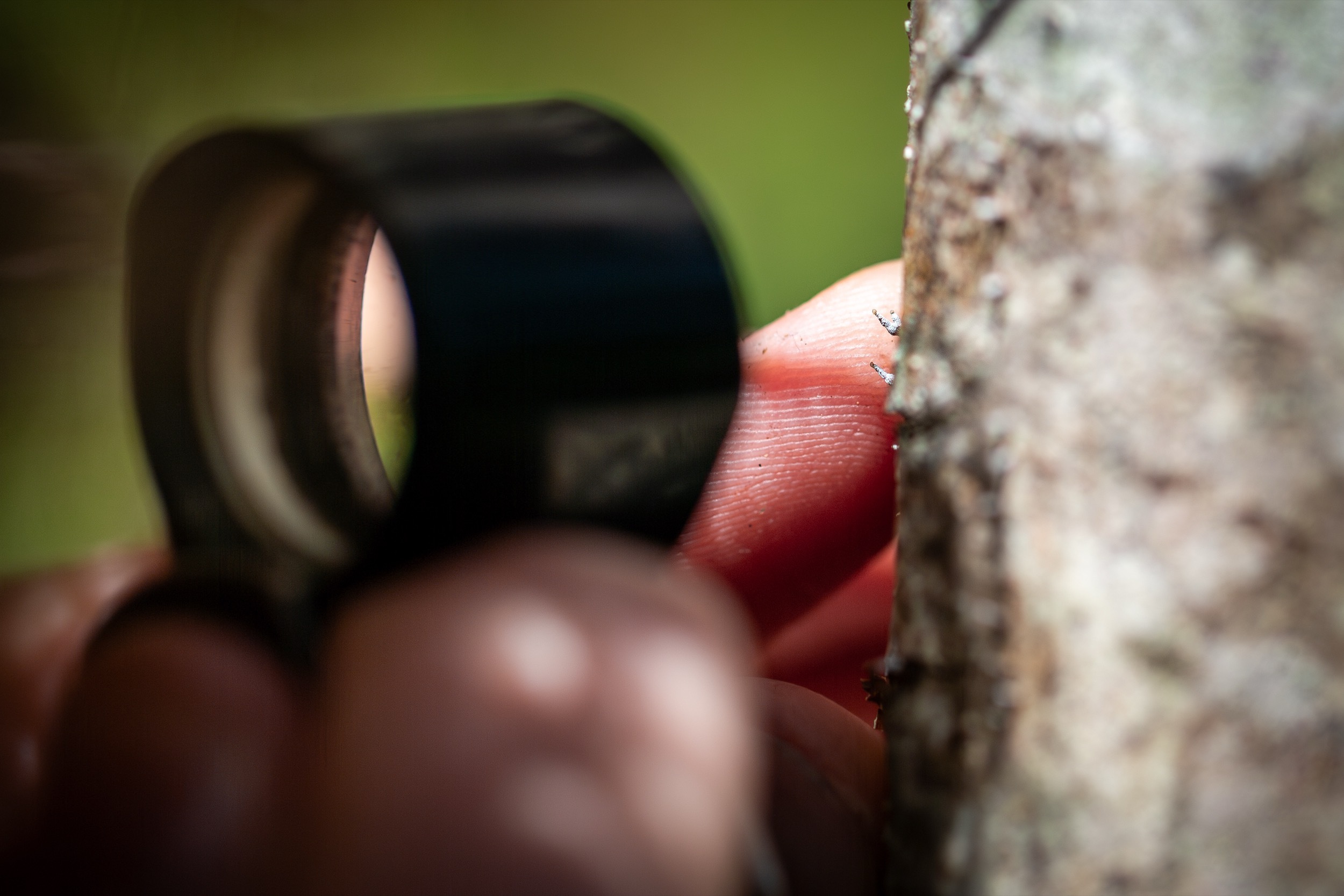
“Once you take a look through the little hand lens, it opens up a whole new world. During the bioblitz, I’ve loved seeing people’s reactions as they peer through the lens and see all the unique and beautiful features of lichen.”
—Jessica Allen, assistant professor of integrative plant biology, Eastern Washington University
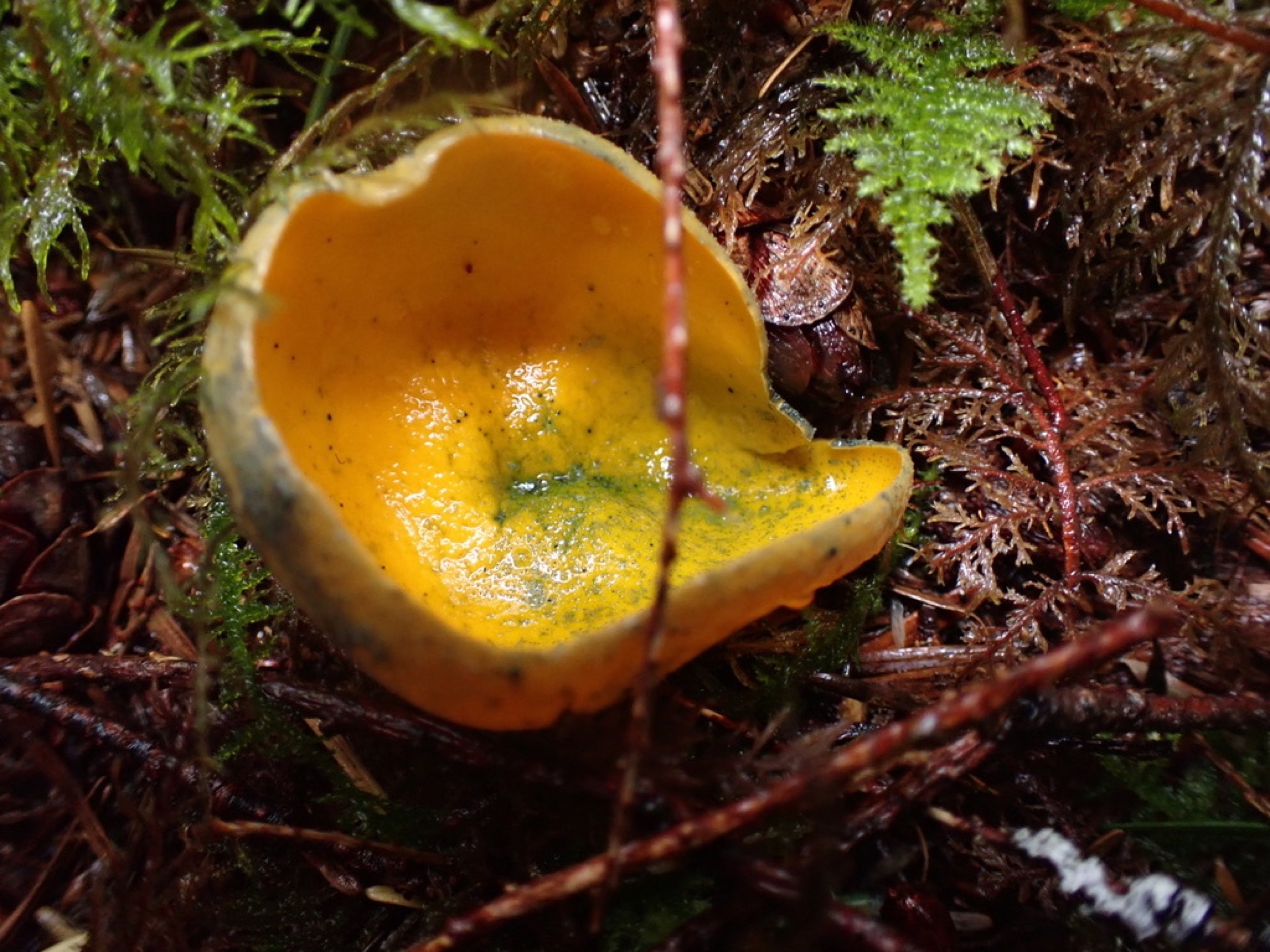
Fungi and lichens on Quadra Island come in a dazzling array of forms and colors, clinging to rocks, tree bark, and branches. Among the showstoppers is the aptly named candy lichen (top photo, by John Reynolds)—its vivid hues and sugary crust make it look almost good enough to eat—and orange peel fungi (bottom left photo, by Arianne Nickels). These organisms play an important role in the forest, helping to cycle nutrients, create habitat for tiny invertebrates, and fix nitrogen in the soil. During the bioblitz, researchers and participants alike were drawn in by the tiny, otherworldly details revealed through a hand lens. They were able to get a closer look at a quiet but essential part of the island’s biodiversity.
Fungi and lichens on Quadra Island come in a dazzling array of forms and colors, clinging to rocks, tree bark, and branches. Among the showstoppers is the aptly named candy lichen (first photo, by John Reynolds)—its vivid hues and sugary crust make it look almost good enough to eat—and orange peel fungi (second photo, by Arianne Nickels). These organisms play an important role in the forest, helping to cycle nutrients, create habitat for tiny invertebrates, and fix nitrogen in the soil. During the bioblitz, researchers and participants alike were drawn in by the tiny, otherworldly details revealed through a hand lens. They were able to get a closer look at a quiet but essential part of the island’s biodiversity.
In this region, land meets sea and fresh water intermingles with salt water.
Tidal ebbs and flows presented shoreline researchers with a unique set of challenges and discoveries.
Remarkable adaptations are necessary to survive in this dynamic environment. Scientists documented organisms clinging to rocks, burrowing in the sand, and teeming in tide pools.
They were surprised to find seaweeds on Quadra Island that are normally restricted to open-ocean shorelines, such as the southern stiff-stiped kelp, which thrives in areas of high wave action.
Other common marine algae were nowhere to be seen. The shifting ranges of seaweeds raise questions about the changing oceanographic conditions that support these slippery life forms.
Shoreline
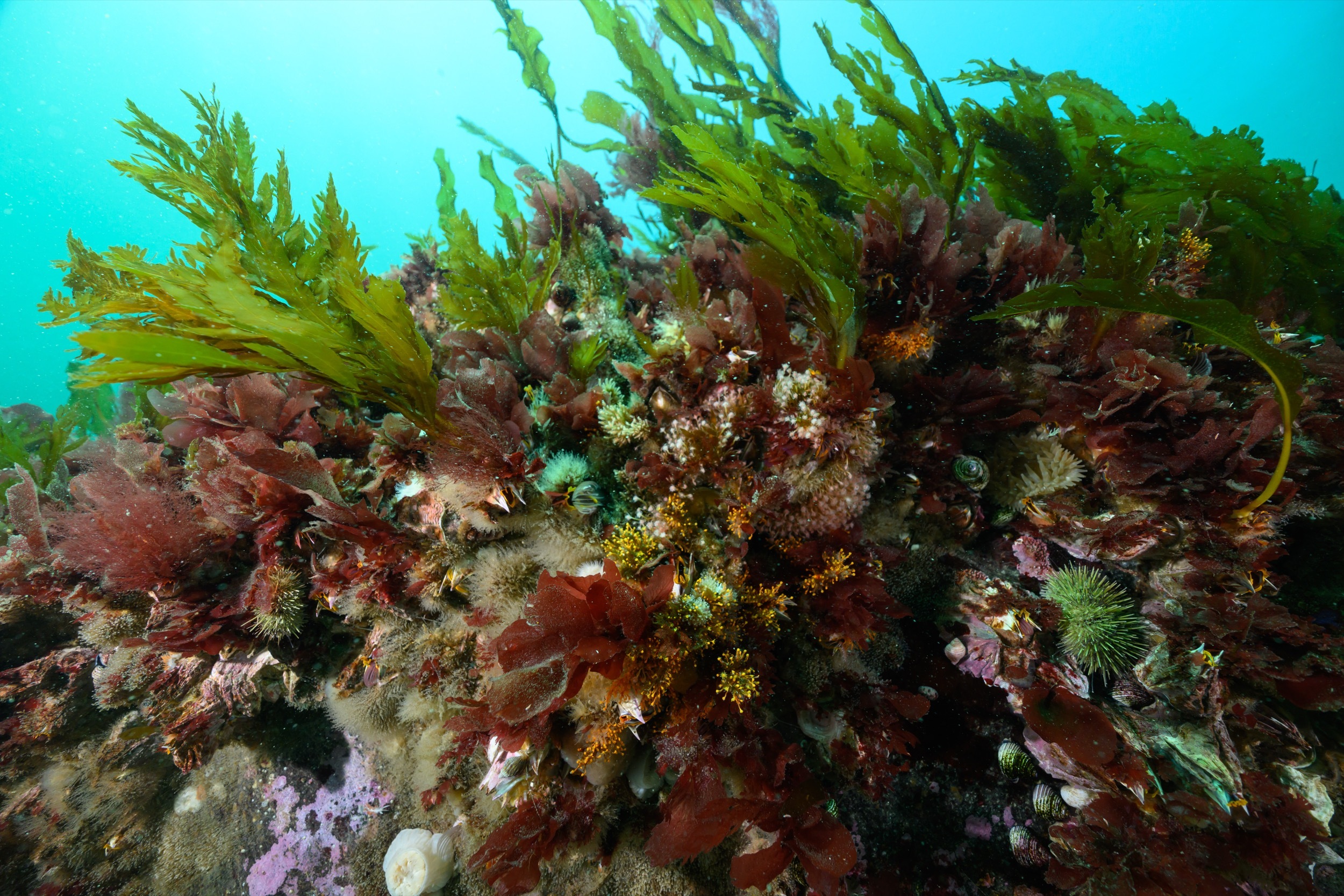
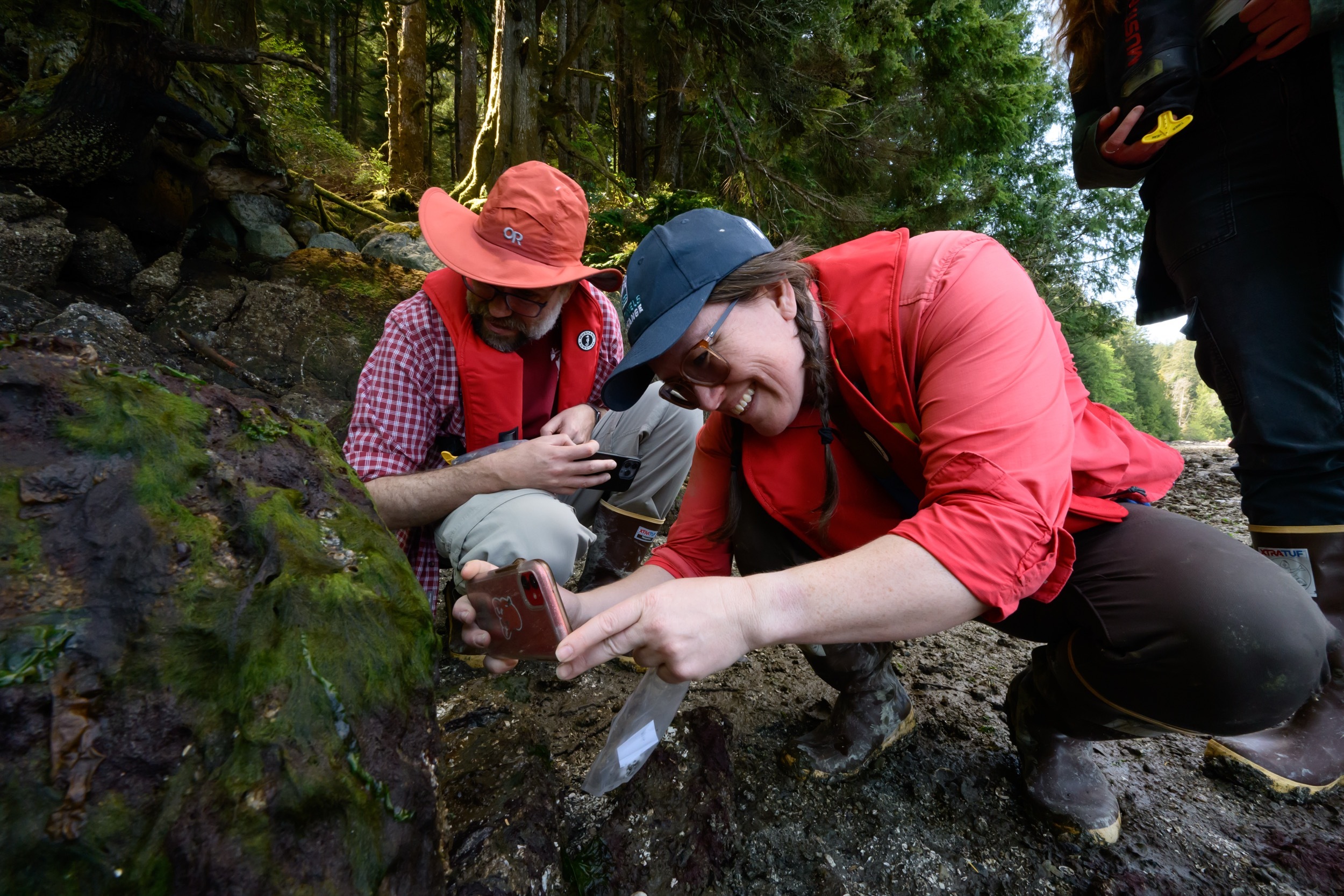
Life in the rocky intertidal zone must survive the extremes of being above and below the waterline. Red and green seaweeds cover rocks in Surge Narrows Park, near the surface where the currents rip past with rising and falling tides (left photo). At low tide, such organisms must be able to withstand exposure to heat, sunlight, and air. Hakai Institute marine ecologist Alyssa Gehman is accustomed to scrambling on slippery rocks to study these amazingly resilient species (right photo).
Life in the rocky intertidal zone must survive the extremes of being above and below the waterline. Red and green seaweeds cover rocks in Surge Narrows Park, near the surface where the currents rip past with rising and falling tides (first photo). At low tide, such organisms must be able to withstand exposure to heat, sunlight, and air. Hakai Institute marine ecologist Alyssa Gehman is accustomed to scrambling on slippery rocks to study these amazingly resilient species (second photo).
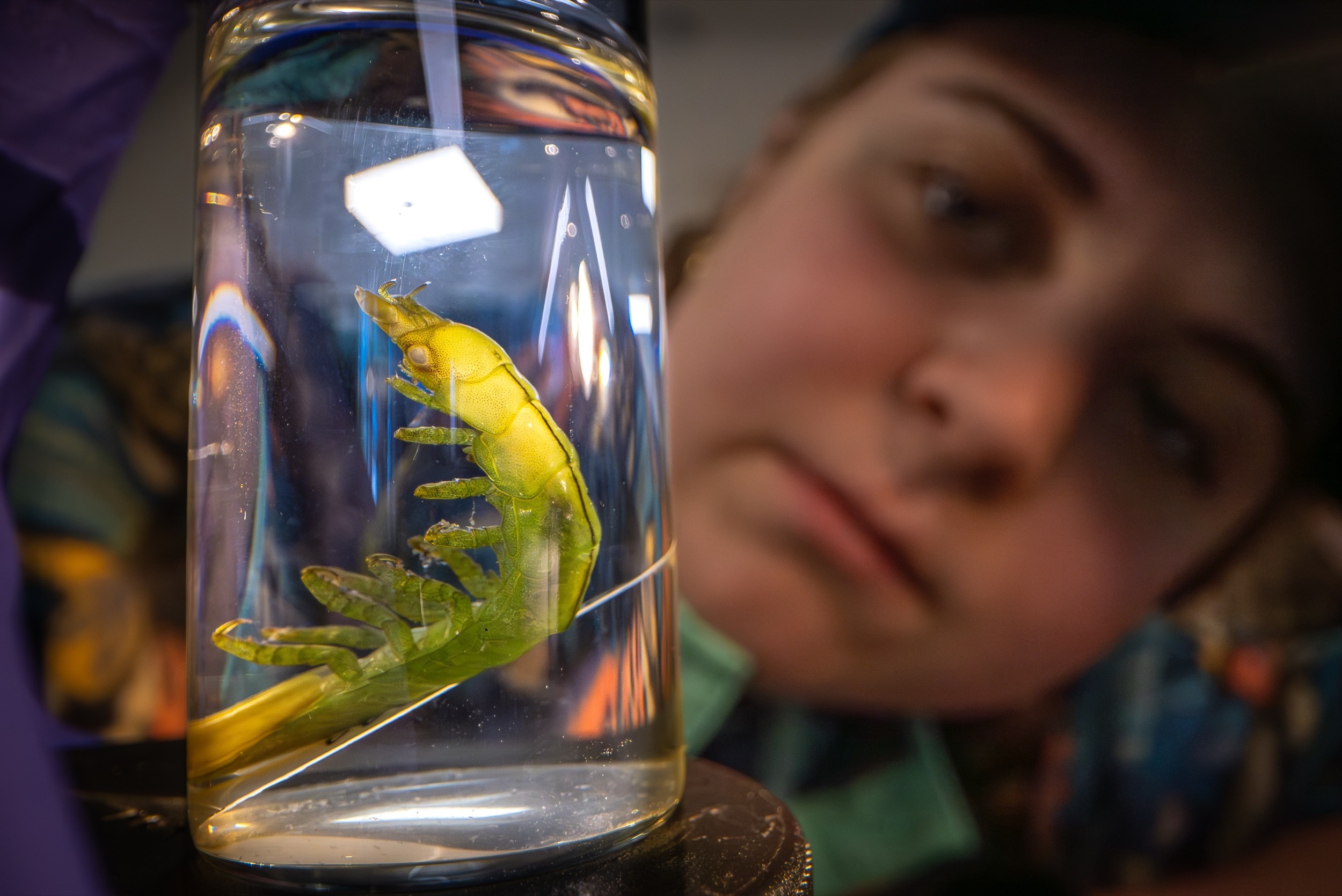
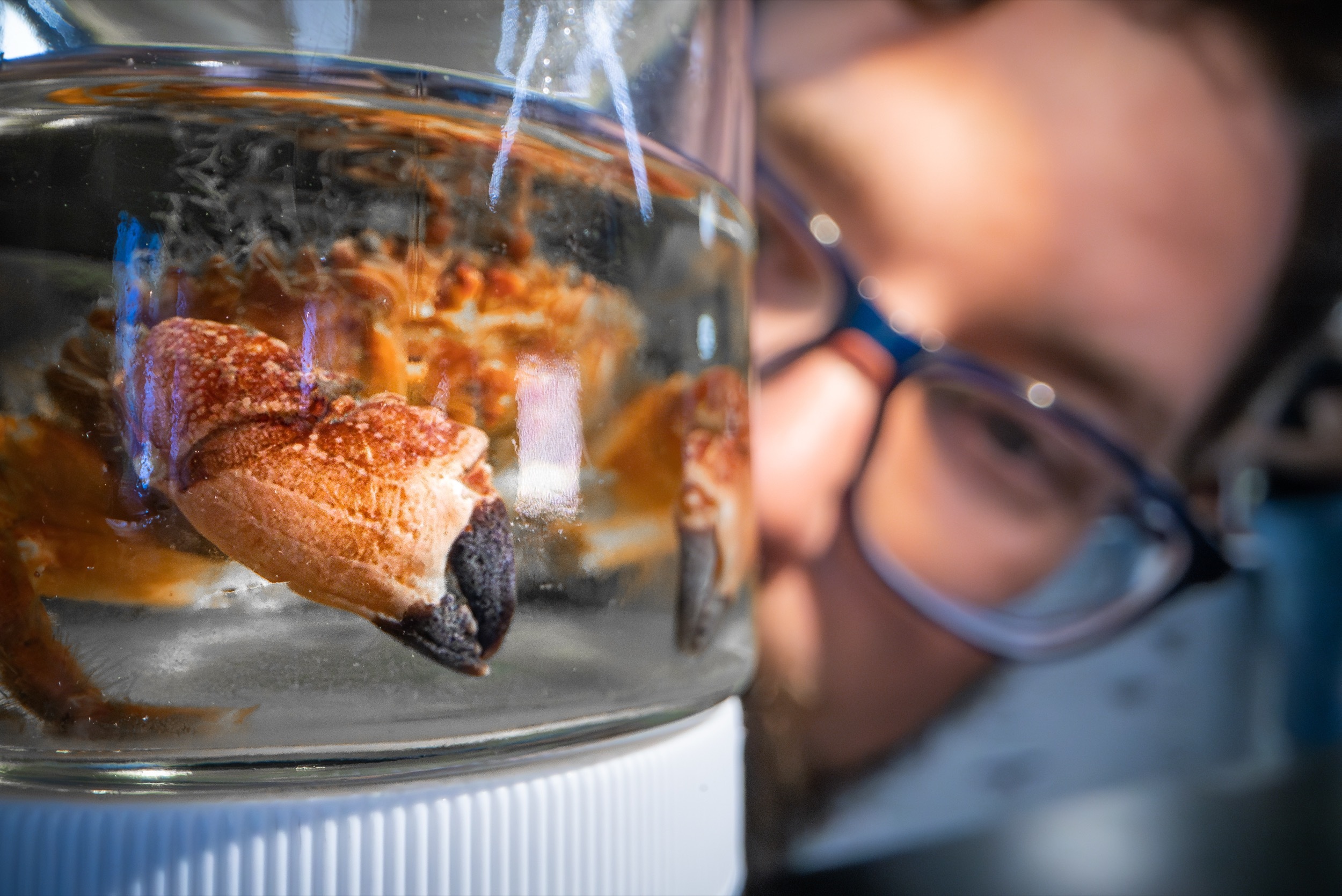
Between the high and low tide line on Quadra Island, bioblitz researchers uncovered a range of marine life, from the familiar to the extraordinary. Matt Whalen, a former postdoctoral scholar for the Hakai Institute, examined a red rock crab—one of the region’s more recognizable coastal residents (top left photo)—while Hakai researcher Amelia Nimmon studied an idotea, a leaflike isopod that camouflages so well it can disappear into a bed of seagrass (top right photo). Most surprising was the discovery of a basket star, a deep-sea species rarely seen in the shallows (bottom photo). With its intricate, curling arms adapted to snatch prey from strong currents, the basket star had likely been swept in by an unusually forceful tide near Seymour Narrows, off the west side of Quadra Island. Its unexpected appearance is a reminder of how dynamic coastal ecosystems can be.
Between the high and low tide line on Quadra Island, bioblitz researchers uncovered a range of marine life, from the familiar to the extraordinary. Matt Whalen, a former postdoctoral scholar for the Hakai Institute, examined a red rock crab—one of the region’s more recognizable coastal residents (first photo)—while Hakai researcher Amelia Nimmon studied an idotea, a leaflike isopod that camouflages so well it can disappear into a bed of seagrass (second photo). Most surprising was the discovery of a basket star, a deep-sea species rarely seen in the shallows (third photo). With its intricate, curling arms adapted to snatch prey from strong currents, the basket star had likely been swept in by an unusually forceful tide near Seymour Narrows, off the west side of Quadra Island. Its unexpected appearance is a reminder of how dynamic coastal ecosystems can be.
“Quadra is interesting because it’s where two different oceanographic areas meet. It’s the north end of the Strait of Georgia but then you have the Inside Passage with all the narrowness and the upwelling. And so you expect some colder-water species to come down here…”
“It’s a very rich area where we could get some new records of things from the north that haven’t been sampled before.”
—Sandra Lindstrom, adjunct professor, University of British Columbia
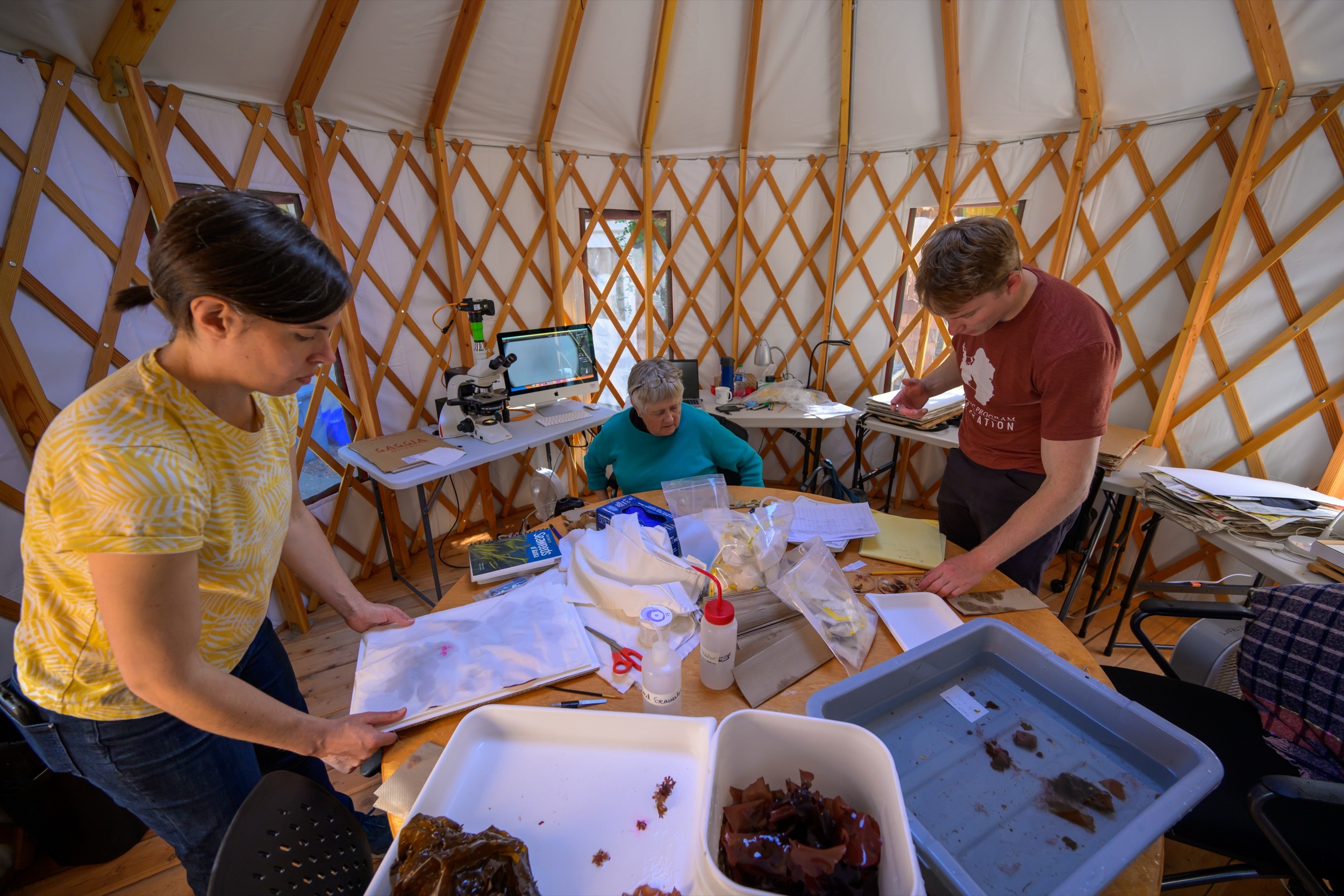
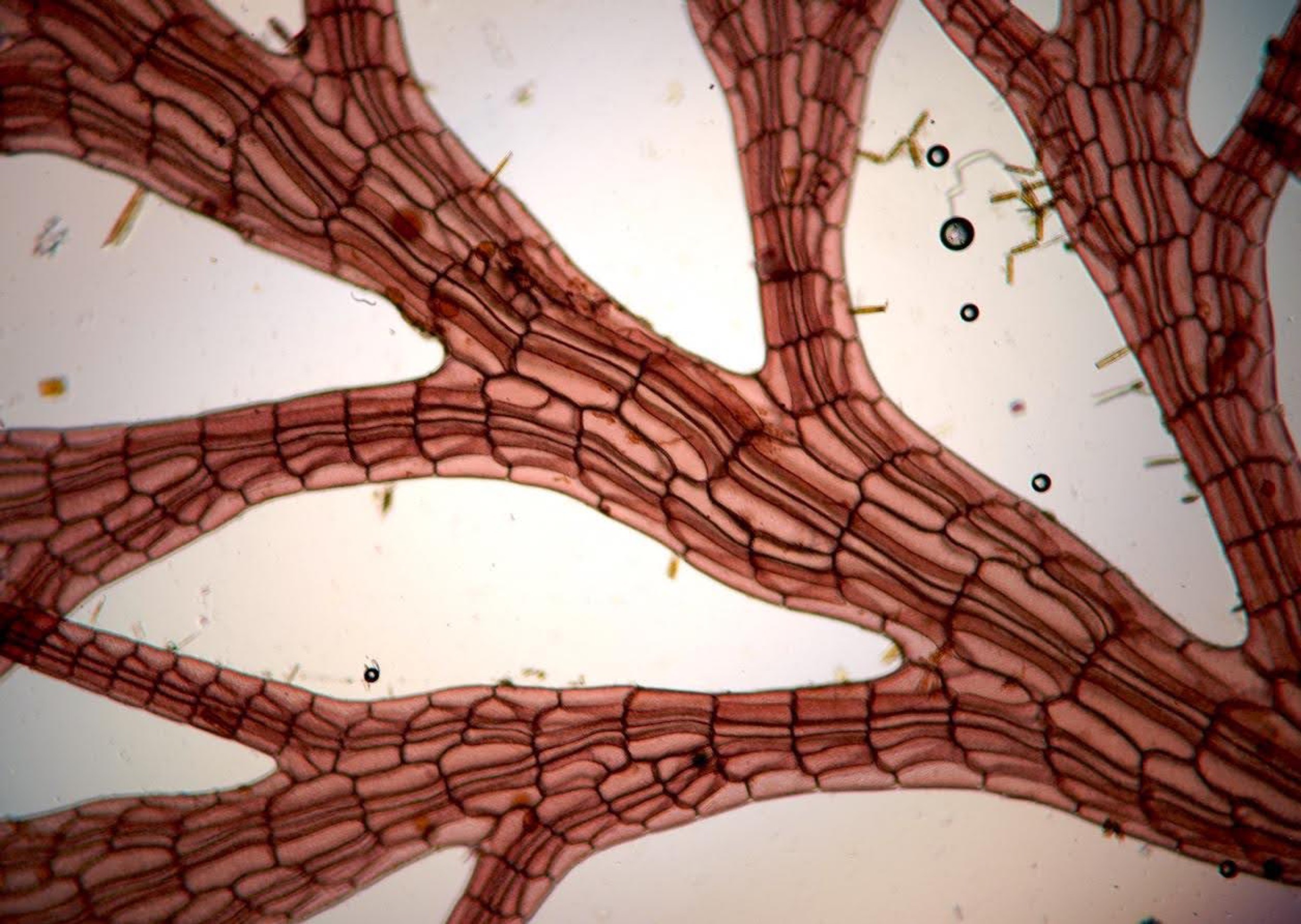
Hakai Institute researchers Margot Hessing-Lewis and Isaak Haberman work alongside Sandra Lindstrom, an adjunct professor at the University of British Columbia, to press unique seaweeds for long-term preservation and to allow detailed examination of their morphology and structure (left photo). Among the finds was a lone individual from the red algae genus Symphyocladiella, its intricate cell structure revealed under the microscope (right photo). The rarity of this specimen during the bioblitz hints at its scarcity in local waters, raising questions about its distribution and ecology. Because many seaweeds are nearly indistinguishable by sight alone, each sample undergoes genetic sequencing to confirm its identity, shedding light on the diversity hidden throughout the coast.
Hakai Institute researchers Margot Hessing-Lewis and Isaak Haberman work alongside Sandra Lindstrom, an adjunct professor at the University of British Columbia, to press unique seaweeds for long-term preservation and to allow detailed examination of their morphology and structure (first photo). Among the finds was a lone individual from the red algae genus Symphyocladiella, its intricate cell structure revealed under the microscope (second photo). The rarity of this specimen during the bioblitz hints at its scarcity in local waters, raising questions about its distribution and ecology. Because many seaweeds are nearly indistinguishable by sight alone, each sample undergoes genetic sequencing to confirm its identity, shedding light on the diversity hidden throughout the coast.
To extend the bioblitz’s reach beyond the low tide line, researchers got into dive gear and submerged.
Here, in the underwater world surrounding Quadra Island, they explored kelp forests, rocky reefs, and even shipwrecks, such as the May Island ferry wreck.
The submarine survey unveiled a vibrant tapestry of marine life, from colorful invertebrates to schooling fish.
The verdict: stunning biodiversity flourishes beneath the waves.
Undersea
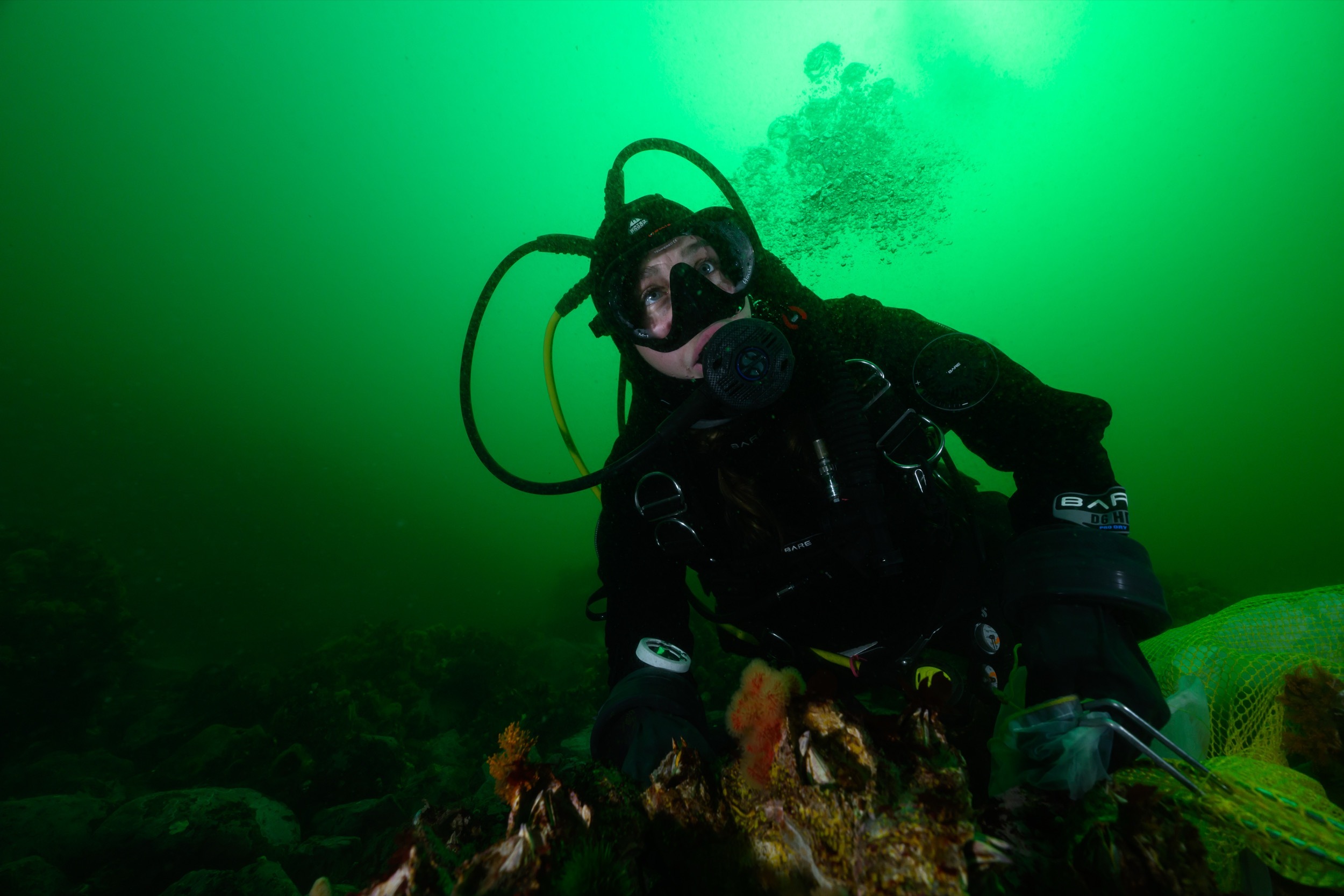
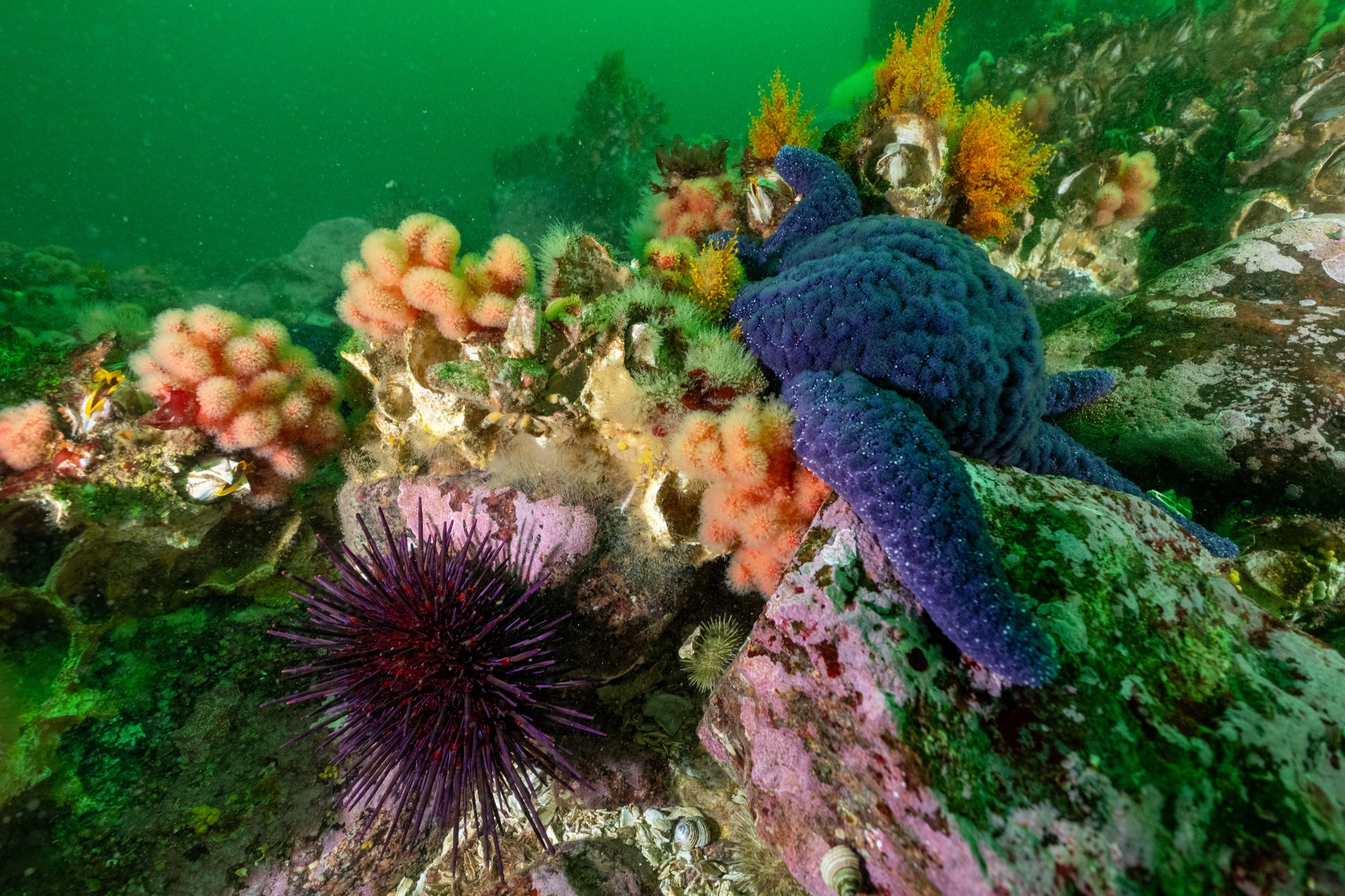
At Surge Narrows, where powerful tidal currents squeeze through the narrow channel between Vancouver and Quadra Islands, life clings on—literally and figuratively (first photo). Divers like Gillian Sadlier-Brown, a field technician from the Hakai Institute (second photo), must enter the water during a tight window of slack tide when the ocean briefly catches its breath. In those precious 10 to 15 minutes, fish like this sculpin (third photo, center frame) emerge from the crevices, and the team quickly documents the marine life adapted to the surge.
At Surge Narrows, where powerful tidal currents squeeze through the narrow channel between Vancouver and Quadra Islands, life clings on—literally and figuratively (top left photo). Divers like Gillian Sadlier-Brown, a field technician from the Hakai Institute (top right photo), must enter the water during a tight window of slack tide when the ocean briefly catches its breath. In those precious 10 to 15 minutes, fish like this sculpin (bottom photo, center frame) emerge from the crevices, and the team quickly documents the marine life adapted to the surge.
“Having worked extensively in the subtropical and tropical waters of Japan, the animals, environment, and lab on Quadra Island presented a novel experience. Bringing together experts in diverse flora, fauna, and fields for intensive research offers significant advantages.”
—Daisuke Uyeno, parasite expert and professor, Kagoshima University
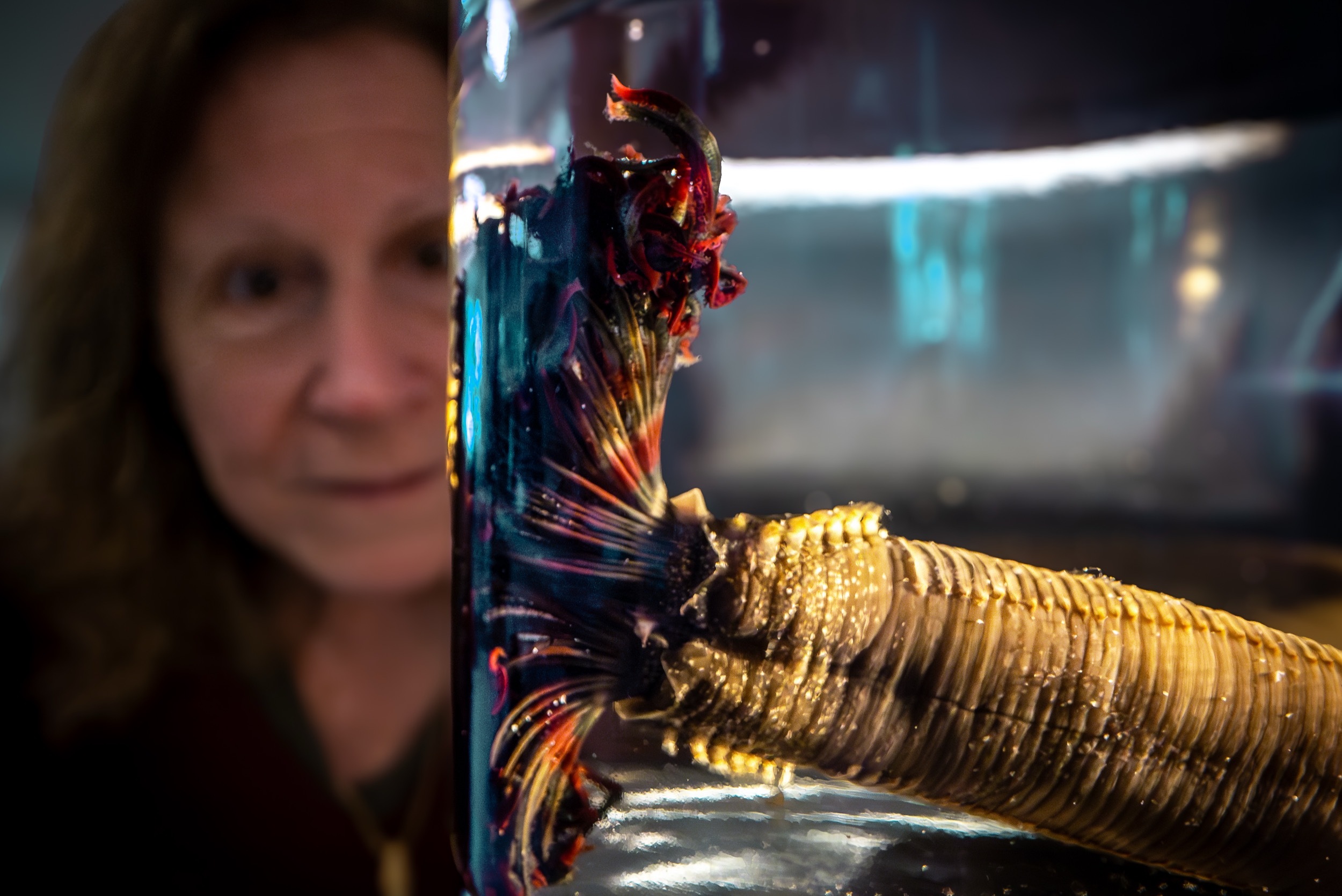
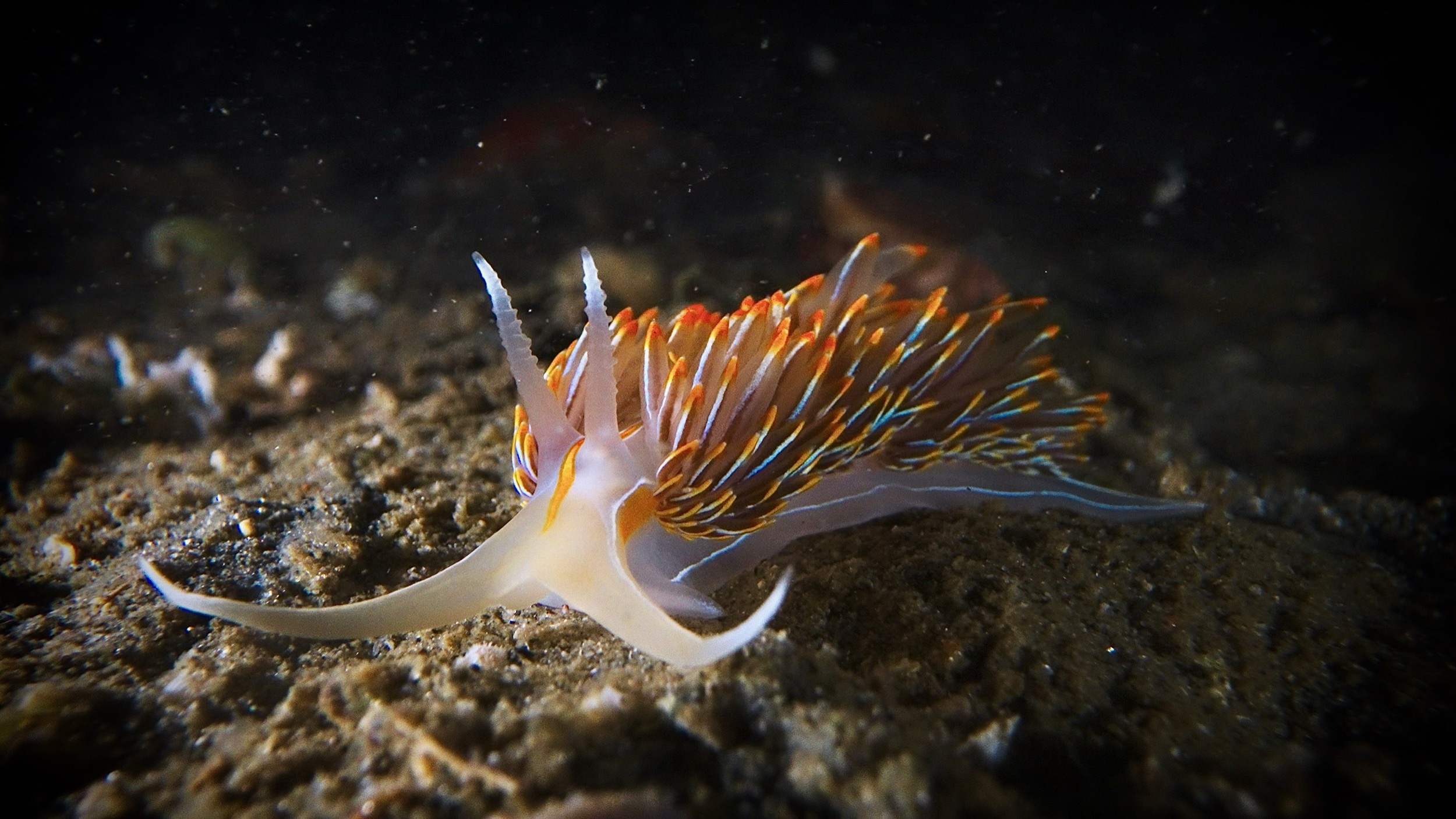
The world below the surface teems with strange and spectacular beauty. Leslie Harris, a senior collections manager at the Natural History Museums of Los Angeles County, examines a northern feather duster worm, its delicate tendrils unfurling like an undersea bloom (left photo). In a different corner of the submarine environment, a luminous opalescent nudibranch glides across the ocean floor, hunting for food (right photo).
The world below the surface teems with strange and spectacular beauty. Leslie Harris, a senior collections manager at the Natural History Museums of Los Angeles County, examines a northern feather duster worm, its delicate tendrils unfurling like an undersea bloom (first photo). In a different corner of the submarine environment, a luminous opalescent nudibranch glides across the ocean floor, hunting for food (second photo).
“Only eleven percent of invertebrates are described. So without bioblitzes, you’ll never know what’s out there. And with the climate changing so quickly, we need a baseline for the future so we know how to preserve biodiversity.”
—Brittany Cummings, PhD candidate, University of Florida
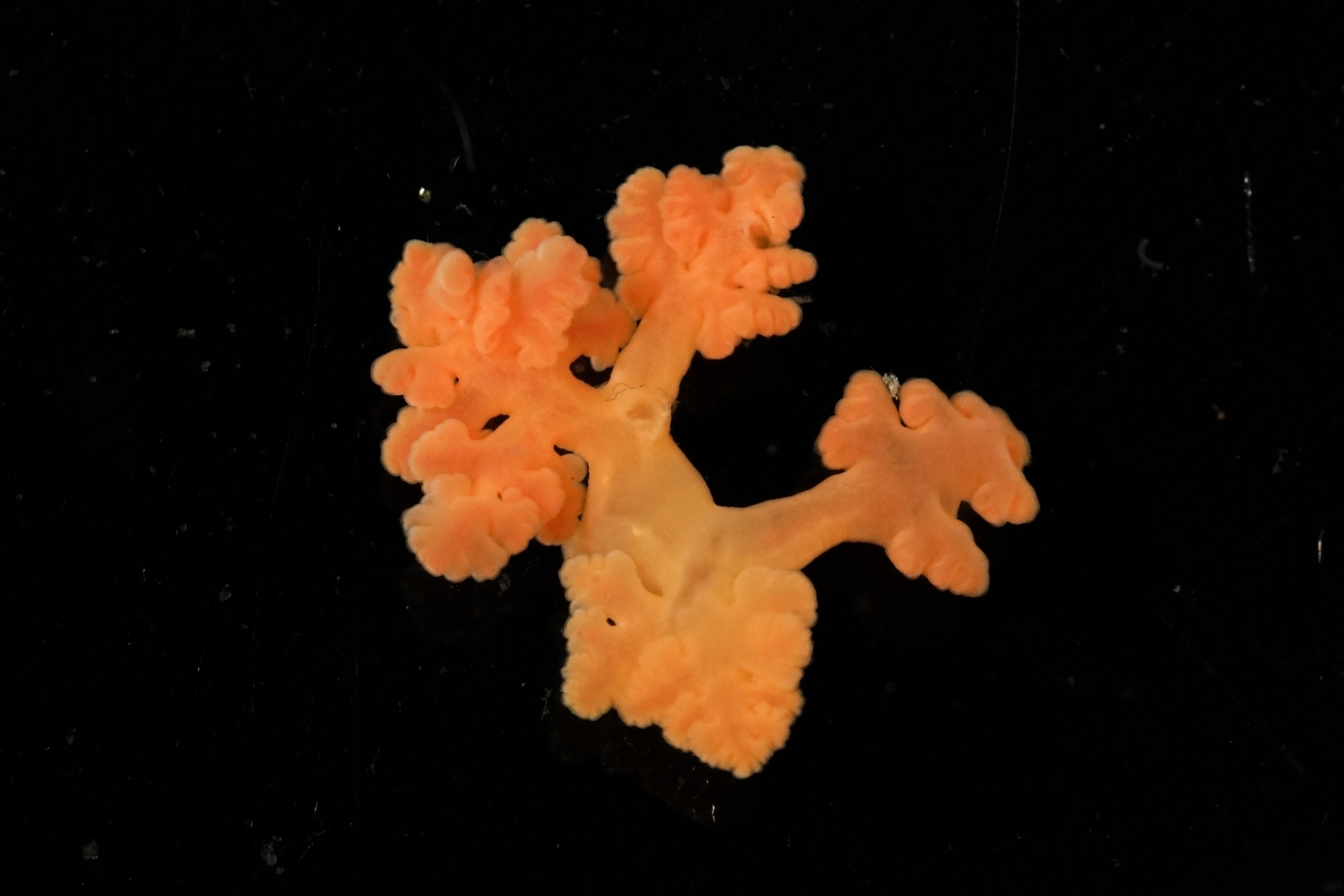
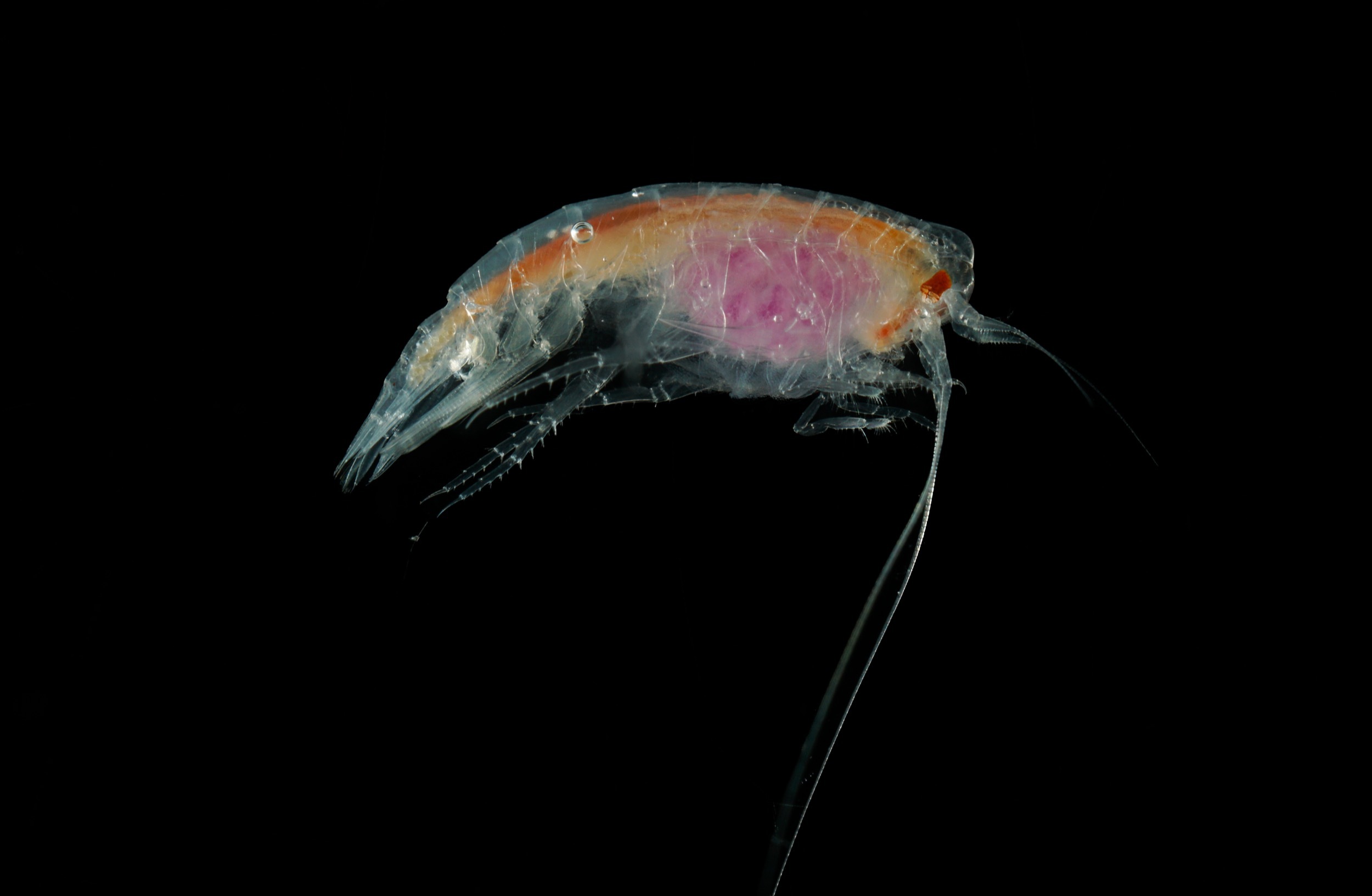
Under the microscope, the hidden world of marine invertebrates comes to light, in its beauty and brutality. Invertebrates act as pollinators, predators, decomposers, and recyclers, playing vital roles in maintaining ecosystem health and balance. A parasitic barnacle found inside a hermit crab was a standout discovery (first photo); it is capable of altering its host’s behavior and even castrating it to serve its own reproductive goals. Nearby, the fine details of a polychaete worm showcase the intricate forms of subtidal life (third photo). Even tiny crustaceans called amphipods reveal their own complex beauty when seen up close (second photo, by Brittany Cummings).
Under the microscope, the hidden world of marine invertebrates comes to light, in its beauty and brutality. Invertebrates act as pollinators, predators, decomposers, and recyclers, playing vital roles in maintaining ecosystem health and balance. A parasitic barnacle found inside a hermit crab was a standout discovery (top left photo); it is capable of altering its host’s behavior and even castrating it to serve its own reproductive goals. Nearby, the fine details of a polychaete worm showcase the intricate forms of subtidal life (bottom photo). Even tiny crustaceans called amphipods reveal their own complex beauty when seen up close (top right photo, by Brittany Cummings).
“Bioblitzes are absolutely fantastic because we get a much closer look than in a normal survey of what’s out there, from the big to the small.”
“I would pay to be part of a bioblitz because I’m with my tribe. We’re taxonomists, we’re crazy about invertebrates, we’re crazy about the bizarrest little worms and crustaceans. The more bizarre an organism is, the more we love it, and our time together exchanging information is just a high point of the year.”
—Leslie Harris, senior collections manager, Natural History Museums of Los Angeles County
Left to right: Brittany Cummings, a PhD candidate at the University of Florida, polychaete taxonomist Leslie Harris, and Olivia Rhoades from Fisheries and Oceans Canada.
You can explore all the observations from the 2024 Quadra Island Bioblitz on iNaturalist.
This story was designed and produced by Katrina Pyne and Jeremy Latham, with editing by Serena Renner and Tyee Bridge. Additional photography by Grant Callegari and Toby Hall.